December 1, 2025
Architectural Digest: Artist Francesca DiMattio’s Exuberant New Designs for Calico Wallpaper


What if the domestic sphere were a little less staid, a little more fun-house? That’s the case in the world of artist Francesca DiMattio, where ceramic confections layer ornamental forms with those of everyday household effects. In one work, she might sculpt a child-size sneaker and a jug of milk within a deconstructed, Meissen-inspired vase; for another, she’ll combine the motifs of floral china and Moroccan rugs into a chandelier. “Rule-breaking is the point that excites me to begin anything,” says DiMattio, who has now channeled that gleefully uncontained logic into a new collection for Calico Wallpaper, previewing at Design Miami.
“If you walk into Francesca’s place in the city, she’s broken every convention,” confirms Calico cofounder Rachel Cope, referring to the Manhattan town house where DiMattio grew up. There, the artist has personalized every inch in riotous fashion, from a breakfast nook clad in blue-and-white ceramics to the bedroom’s porcelain flower–encrusted fireplace. “She has patterns on every surface, and they all fit so perfectly together.”
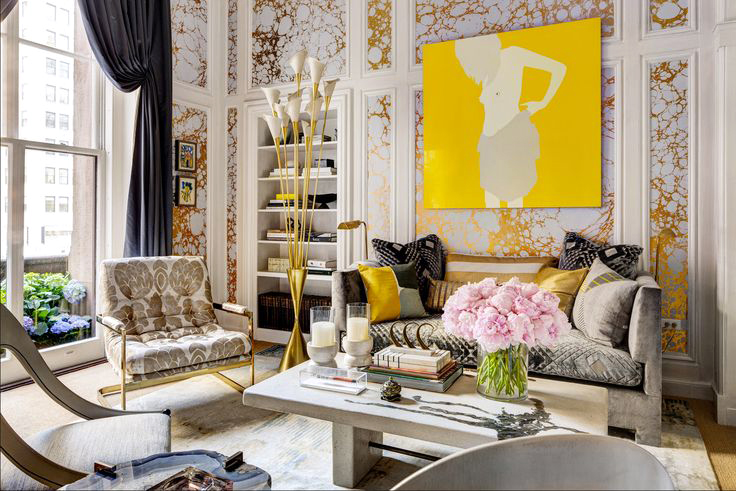
Lattice part of Francesca DiMattios collaboration with Calico Wallpaper sets a backdrop for her work.
Lattice, part of Francesca DiMattio’s collaboration with Calico Wallpaper, sets a backdrop for her work.
Lattice, part of Francesca DiMattio’s collaboration with Calico Wallpaper, sets a backdrop for her work.
For the collaboration, DiMattio has translated some 70 feet of her original paintings (“absurd in the best way”) into two mural-style designs, each available in seven colorways. One pattern, titled Mosaic, is a trompe l’oeil scene featuring palm trees, flowers, and a peacock with heart-embellished tail feathers—a loose homage to her home’s hand-painted entryway by way of Pompeii. The second, Lattice, presents a constellation of fancy-dress plates—the sort that might line her dinner table—against a crosshatched ground. “I’m always thinking of ways to change how we meet the feminine,” DiMattio says, pointing out how the agitated brushstrokes feel closer to graffiti than the “sweet and polished” source material.
Photography by Em McCann Zauder